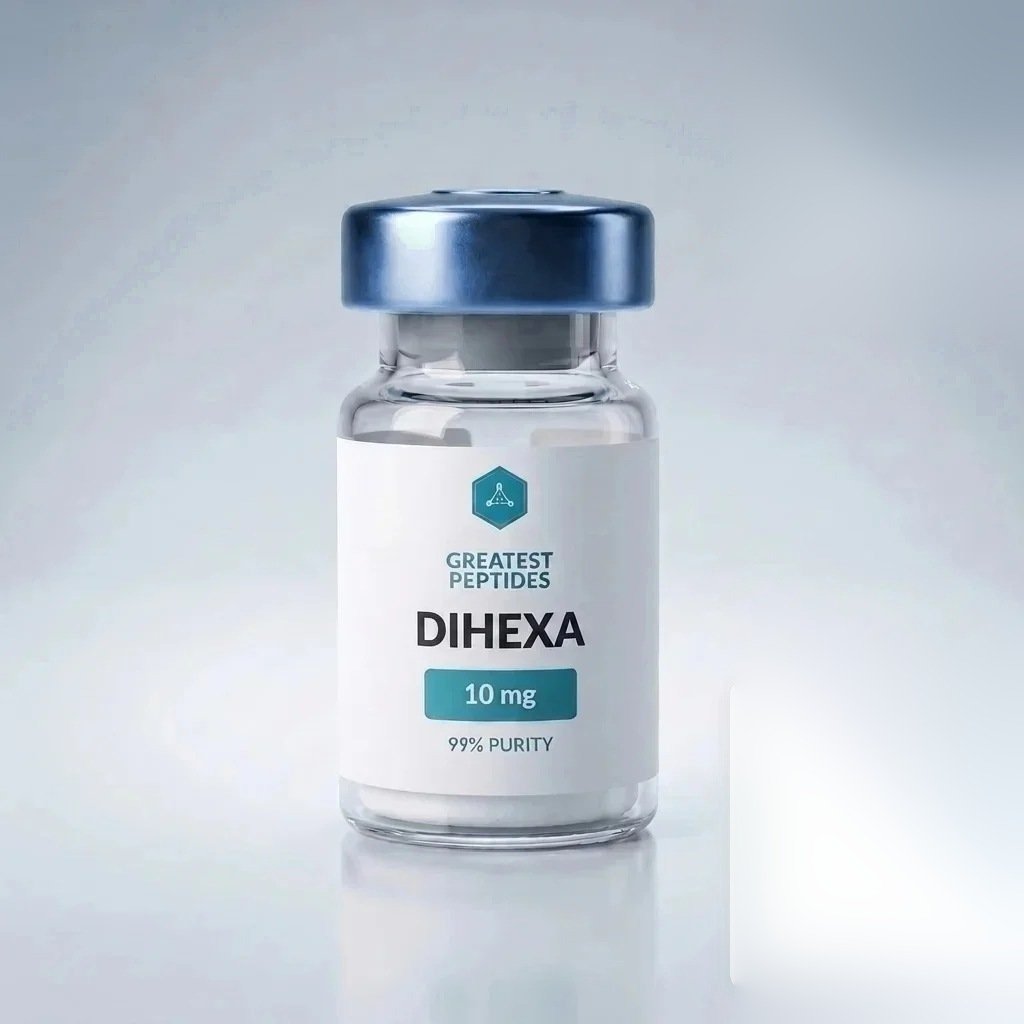
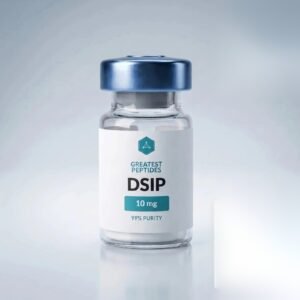
$61.99Original price was: $61.99.$54.99Current price is: $54.99.
In stockShips today if ordered by 3 PM ESTUSA fulfillment
Research Studies
✓Studied as an angiotensin IV analog in synaptogenesis and cognition research.
✓Investigated for HGF/c-Met signaling in vitro.
✓Used in laboratory models of neural connectivity.
✓Applied in neuroplasticity research assays.
Dihexa 10 mg is supplied at 99%+ purity for in-vitro laboratory research only. Not for human or veterinary use.
Reconstituting this vial? Our free peptide reconstitution calculator converts vial mass and diluent volume into concentration, draw volume and U-100 syringe graduations. Research use only.
ALL ARTICLES AND PRODUCT INFORMATION PROVIDED ON THIS WEBSITE ARE FOR INFORMATIONAL AND EDUCATIONAL PURPOSES ONLY. The products offered on this website are intended solely for research and laboratory use. These products are not intended for human or animal consumption. They are not medicines or drugs and have not been evaluated or approved by the FDA to diagnose, treat, cure, or prevent any disease or medical condition. Any form of bodily introduction is strictly prohibited by law.
Dihexa is a synthetic oligopeptide derived from angiotensin IV, developed as a research tool for studying synaptogenesis and cognition. It is investigated for its interaction with the hepatocyte growth factor (HGF)/c-Met signaling system. Greatest Peptides supplies Dihexa as a >99% pure powder for laboratory research use only.
Dihexa, an angiotensin IV analog investigated in neuroscience research (lyophilized). For research use only.
Purity: ≥98% HPLC (see batch COA); identity confirmed by LC-MS. A batch-specific Certificate of Analysis (COA) is available for each lot. For laboratory and research use only. Not for human or animal consumption.
Dihexa Research Overview
In published preclinical literature, Dihexa has been investigated as a potent angiotensin IV analog studied for its relationship to the HGF/c-Met pathway, synapse formation, and procognitive endpoints in animal models. Its reported stability and lipophilicity have made it a subject of interest in neurotrophic and synaptogenesis research.
These observations describe outcomes reported in laboratory and animal research models only. Dihexa is a research chemical — it is not a dietary supplement, drug, or therapeutic product, and nothing here describes effects in humans.
Related Research Topics
Dihexa and the HGF/c-Met system
Angiotensin-IV analogs in cognition research
Dihexa synaptogenesis models
Frequently Asked Questions
What is Dihexa used for in research?
Dihexa is used strictly as a tool compound in laboratory research, as described in the overview above. It is studied in controlled models only.
Is Dihexa research use only?
Yes. All compounds from Greatest Peptides are supplied strictly for laboratory and research use only. They are not intended for human or veterinary use.
What purity is your Dihexa?
Supplied at 99%+ HPLC purity with a batch-specific Certificate of Analysis (COA) confirming purity by HPLC and identity by mass spectrometry for your exact lot.
How should Dihexa be stored?
Lyophilized Dihexa is typically kept refrigerated and protected from light for short-term handling, and frozen (-20°C) for longer-term storage.
How is Dihexa supplied?
Dihexa ships as a lyophilized powder, 10 mg per vial, requiring reconstitution with a suitable solvent prior to research use.
Additional information
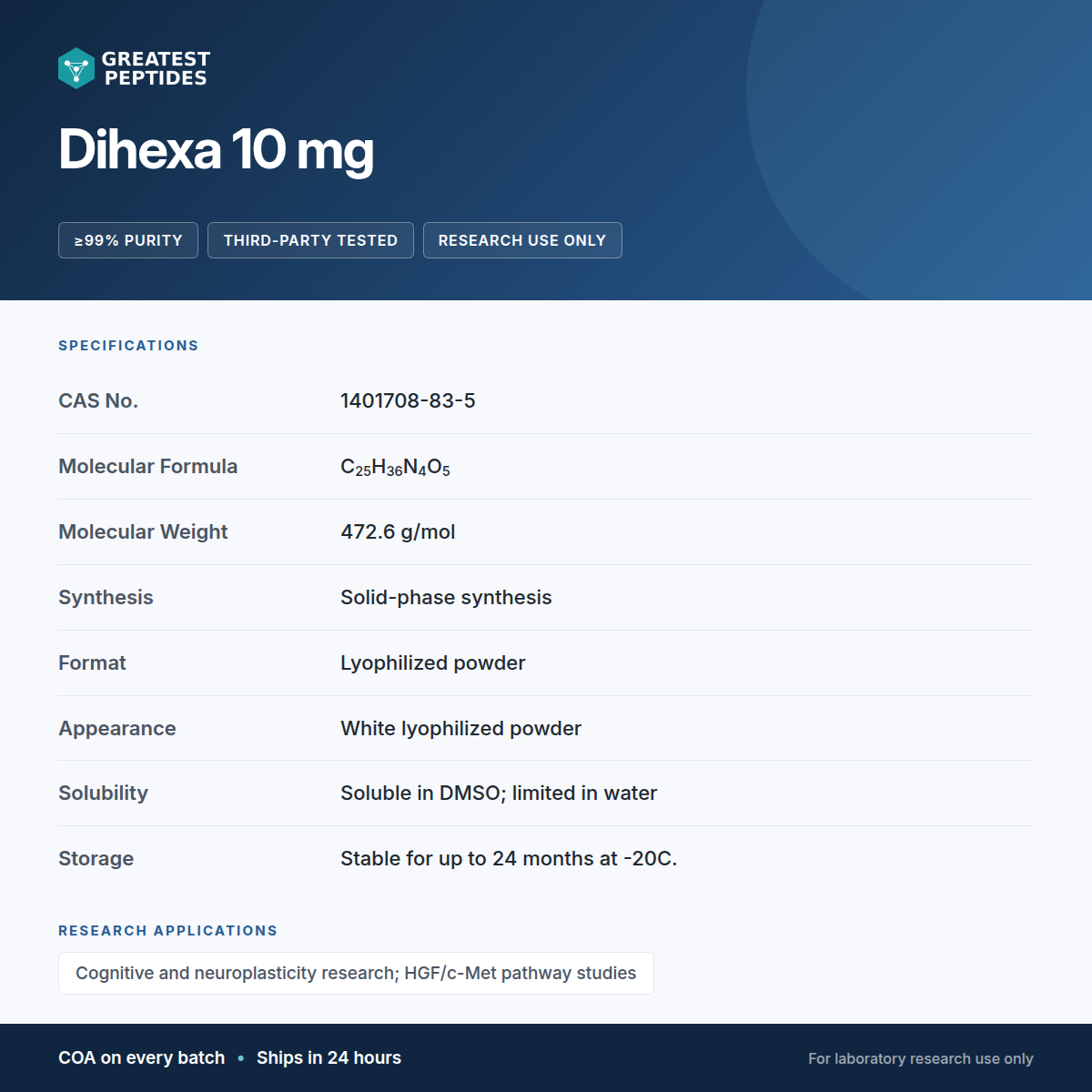
CAS No.
1401708-83-5
Purity
>=99%
Sequence
N/A (angiotensin IV analog)
Molecular Formula
C25H36N4O5
Molecular Weight
472.6 g/mol
Synthesis
Solid-phase synthesis
Format
Lyophilized powder
Solubility
Soluble in DMSO; limited in water
Stability & Storage
Stable for up to 24 months at -20C. After reconstitution, store at 4C for up to 4 weeks or at -20C for up to 6 months.
Applications
Cognitive and neuroplasticity research; HGF/c-Met pathway studies
Appearance
White lyophilized powder
Shipping Conditions
Shipped at ambient temperature; once received, store at -20C
Regulatory/Compliance
Manufactured in a facility that adheres to cGMP guidelines
Safety Information
Refer to provided MSDS
Researcher FAQ
How do I reconstitute this peptide?
Use bacteriostatic water (BAC) at a 1–2 mL volume per vial. Add the solvent slowly down the vial wall, swirl gently — never shake. Refrigerate after reconstitution and use within 30 days. For in-vitro laboratory handling only.
How should I store this product?
Lyophilized: 36–46°F (refrigerated) for up to 24 months. Reconstituted: keep refrigerated and protect from light; use within 30 days. Avoid repeated freeze-thaw cycles.
Shipping & tracking?
Orders placed before 3 PM EST ship the same business day from our USA facility. Tracking is emailed within 24 hours. Plain, discreet packaging. Free shipping on orders over $150.
Buy Dihexa for Research | RUO COA & Documentation Guide
For laboratory teams evaluating where to buy Dihexa for research, the priority is documentation, compound identity, and research-use-only (RUO) alignment. Dihexa (PNB-0408) is a modified dipeptide (systematic name N-hexanoic-Tyr-Ile-(6)-aminohexanoic amide) catalogued by PubChem with the molecular formula C27H44N4O5 and a molecular weight of approximately 504.7 g/mol (PubChem CID 125355097)[1] (CAS 1401708-83-5). It is described in the literature as an angiotensin IV analog studied in HGF/c-Met pathway research[2].
Fast Answer
Researchers evaluating where to buy Dihexa for research should review RUO labeling, a batch-specific certificate of analysis (COA), HPLC purity data, LC-MS or comparable identity support, structure/mass consistency, and lot traceability before procurement. Material discussed here is intended for laboratory research use only and is not for human or veterinary use.
What Does “Buy Dihexa for Research” Mean?
The phrase is addressed as laboratory research-procurement intent — how qualified researchers, institutions, and technical buyers evaluate a Dihexa reference material through documentation, analytical support, and labeling clarity, not personal, clinical, or consumer decision-making.
Compound Identity & Classification
Compound name
Dihexa (PNB-0408)
PubChem CID
125355097[1]
CAS number
1401708-83-5
Molecular formula
C27H44N4O5[1]
Molecular weight
≈ 504.7 g/mol[1]
Systematic name
N-hexanoic-Tyr-Ile-(6)-aminohexanoic amide
Classification
Modified dipeptide; angiotensin IV analog[2]
Product form
Lyophilized powder
Purity target
≥ 99% (see batch-specific COA)
Regulatory status
Research use only — not for human or veterinary use
Pathway Context (Angiotensin IV Analog / HGF-c-Met Research)
Published literature discusses Dihexa within angiotensin IV analog and HGF/c-Met pathway research in cell and preclinical models[2]. On a research product page this pathway context should remain academic literature interpretation used to define the research lane — it is not converted into product-performance language, and the literature caveat below should be weighted carefully.
COA, Purity & Identity Documentation
A Dihexa COA should be reviewed as a batch-specific record, not a marketing statement. Look for compound name, lot number, test date, stated purity, analytical method, identity confirmation, and structure/mass information. Purity, identity, method, and lot number should be evaluated together.
Evaluation area
What to review
Why it matters
RUO labeling
Clear research-use-only language
Separates research procurement from human-use positioning
COA availability
Batch-specific certificate for the received lot
Supports lot-level documentation
Purity data
HPLC area-percent support for stated purity
Helps evaluate material consistency
Identity testing
LC-MS / mass-spec confirmation vs expected mass
Confirms the material matches the listed compound
Lot traceability
Lot number matching across records
Supports research recordkeeping
HPLC, LC-MS & Analytical Review
HPLC documentation supports purity assessment; LC-MS or mass-spectrometry documentation supports identity confirmation and molecular-mass review[10][11]. For a small modified dipeptide, mass data confirming the observed mass against the expected value are especially useful alongside HPLC purity data. ICH Q2(R2) describes validation characteristics used to interpret assay, purity, and identity results[7].
Lot Traceability & Batch Documentation
Lot traceability connects the product listing, COA, label, and receiving record. ISO/IEC 17025 addresses the competence of testing laboratories, and NIST resources describe how certificates and lot identifiers support traceability[8][9].
Claim Boundary for RUO Positioning
Research-safe statement
Non-compliant version to avoid
“Dihexa is discussed in published literature on angiotensin IV analog research.”
“Dihexa improves memory or cognition.”
“Researchers should review COA and identity data before procurement.”
“Buy Dihexa for brain health.”
“Greatest Peptides supplies Dihexa as a research-use-only material.”
“Greatest Peptides supplies Dihexa for treatment.”
Research Procurement Checklist
Confirm the material is labeled for research use only.
Review the batch-specific certificate of analysis for the received lot.
Confirm purity is supported by HPLC analytical data.
Confirm identity is supported by LC-MS or mass spectrometry.
Compare compound name, structure, formula, and mass across the page, label, and COA.
Verify the lot number matches across all documentation.
Document storage and handling conditions in the laboratory record.
How Greatest Peptides Presents Dihexa
Greatest Peptides supplies Dihexa as a research-use-only laboratory material in lyophilized powder form, positioned around a stated ≥99% purity target, batch-specific COA availability, HPLC/LC-MS documentation, lot-level traceability, and transparent RUO labeling. Products are not intended for human or animal consumption, diagnostic, therapeutic, clinical, or veterinary use.
Published Literature Context
Published Dihexa literature is preclinical and centers on angiotensin IV analog and HGF/c-Met pathway research[2]. Researchers should weight the primary literature carefully: a key Dihexa research paper was retracted in 2025[3]. This reinforces a documentation-first approach — rely on the batch COA and independent analytical verification rather than on any single literature source, and do not generalize model-specific findings.
Contributing Researchers
Recognized for foundational work on the compound’s design; see the literature caveat above
Joseph W. Harding, PhD — led the design of the angiotensin IV analog Dihexa (PNB-0408) and its early characterization in HGF/c-Met pathway research. Researchers should note the 2025 retraction referenced above and weight primary literature accordingly[2][3].
FAQs About Buying Dihexa for Research
What should researchers check before buying Dihexa for research?
Review RUO labeling, the batch-specific COA, stated purity with HPLC support, LC-MS identity data, structure/mass consistency, and lot traceability. Given the literature caveat, prioritize independent analytical verification.
What is Dihexa in research documentation?
A modified dipeptide (N-hexanoic-Tyr-Ile-(6)-aminohexanoic amide, PNB-0408) with molecular formula C27H44N4O5 and a molecular weight near 504.7 g/mol; described as an angiotensin IV analog.
Why does a COA matter when buying Dihexa?
It is the authoritative identity record for the received lot — especially relevant here because researchers should not over-rely on any single literature source (see the 2025 retraction note).
Is Dihexa intended for human or animal use?
No. Material discussed here is intended strictly for laboratory research use only.
How should published literature be interpreted?
As scientific context only, and with particular caution here given a 2025 retraction of a key paper. Model-specific findings should not be generalized or read as use guidance for research-use-only materials.
This page addresses Dihexa only as research-use-only laboratory procurement. Boundary-sensitive terms such as cognition, memory, and neuroprotection are referenced here only as research-language examples that must stay separate from RUO product positioning. All product information is for informational and educational purposes only. Products are not intended for human or animal consumption and have not been evaluated by the FDA to diagnose, treat, cure, or prevent any disease.
References
National Center for Biotechnology Information. Dihexa (PNB-0408), CID 125355097. PubChem Compound record. Accessed 2026.
Harding JW, et al. Dihexa, an angiotensin IV analog, in HGF/c-Met pathway research (preclinical). Neuroscience / peptide literature. 2010s.
Retraction notice for a key Dihexa research paper. 2025. (Weight primary literature accordingly.)
Registry record for Dihexa, CAS 1401708-83-5. Accessed 2026.
IUPAC-IUB Joint Commission. Nomenclature and symbolism for amino acids and peptides. 1983.
U.S. FDA. Analytical procedures and methods validation for drugs and biologics. 2015.
U.S. FDA. Q2(R2) Validation of Analytical Procedures. 2024.
International Organization for Standardization. ISO/IEC 17025:2017. 2017.
National Institute of Standards and Technology. Reference materials and certificates of analysis. Accessed 2026.
Mant CT, et al. HPLC analysis and purification of peptides. Methods in Molecular Biology. 2007.
Steen H, Mann M. Peptide sequencing. Nature Reviews Molecular Cell Biology. 2004. PMID 15340378.
Compound profile
Dihexa: compound profile, literature landscape and handling notes
Dihexa in one paragraph
Dihexa is the one item in this part of the catalog that is not really a peptide in the working sense, and recognizing that early will save a great deal of wasted bench time. It descends from angiotensin IV, a hexapeptide, but almost nothing of that hexapeptide survives in it. What remains is a very short core carrying a lipophilic acyl cap at one end and an amide cap at the other, and the result behaves in solution, on a column and in a mass spectrometer far more like a drug-like small molecule than like the water-soluble synthetic peptides sitting next to it on the shelf. Its published mechanism is also unusual: rather than acting as an agonist in its own right, it is reported to potentiate hepatocyte growth factor signaling through the c-Met receptor tyrosine kinase. Everything below describes the published research record and the behavior of the material on a bench. Nothing here is a claim about what this vial does, and nothing here is applicable to use in humans or animals.
Where Dihexa came from
Dihexa came out of a long-running line of work at Washington State University on the angiotensin IV system, associated principally with the Harding laboratory and its collaborators. The starting point was not drug design at all. It was the observation, accumulated across the 1990s, that angiotensin IV, a hexapeptide fragment generated by further proteolysis of angiotensin II, had activities in brain tissue that could not be explained by the classical angiotensin AT1 and AT2 receptors. That implied a distinct binding site, which the field named AT4, and a substantial body of work went into characterizing what bound there and what happened when it did.
The problem with angiotensin IV as a research tool was practical rather than conceptual. It is a short unmodified peptide with free termini, which means aminopeptidases and carboxypeptidases dismantle it quickly, and it is polar enough that penetration into the central nervous system from a peripheral compartment is poor. Both of those properties are fatal for a compound intended to interrogate a brain system in an intact animal.
The medicinal chemistry that followed was therefore aimed at two specific liabilities, and this is the key to reading the structure. Successive rounds of work truncated the hexapeptide toward the residues that appeared to carry the activity, replaced the exposed termini with groups that peptidases do not recognize, and deliberately raised lipophilicity to improve the chance of crossing the blood-brain barrier. Intermediate compounds in that series, including the norleucine-substituted analog usually written as Nle1-angiotensin IV and the later compound named Norleual, appear throughout the literature and are frequently and wrongly treated as interchangeable with Dihexa.
The name itself encodes the chemistry rather than a target: it points at the two hexyl-length elements in the molecule. That naming convention is worth noting because it means the name tells you nothing about mechanism, which is unusual in this catalog and contributes to how often the compound is misclassified in vendor listings and in secondary summaries.
Reading the structure of Dihexa
The exact chemical name, formula and mass for this listing are printed in the specification table further down this page, and for this compound in particular they are worth actually reading rather than skimming, because the name is a chemical description and not a sequence. What follows is an interpretation of the design motifs.
Start with what was removed. Angiotensin IV is a six-residue peptide, running valine-tyrosine-isoleucine-histidine-proline-phenylalanine. Dihexa retains only a small fragment of that, essentially the tyrosine and isoleucine pair from positions two and three, extended by a non-proteinogenic amino acid spacer. Counted generously that is a tripeptide core, and only two of those units carry over from the parent. Describing Dihexa as a hexapeptide, which happens often, is simply wrong, and it leads people to expect peptide behavior that the molecule does not have.
Now the additions, which are where the molecule actually lives. The N-terminus is not a free amine; it carries an acyl cap, a six-carbon chain in the most commonly cited structure. The C-terminus is not a free carboxylate; it is capped as an amide. Each of those two changes does two things at once. First, they eliminate the recognition elements that exopeptidases require, since an aminopeptidase needs a free alpha-amino group and a carboxypeptidase needs a free carboxyl terminus, so a molecule capped at both ends is inert to the most common route by which a short peptide disappears. Second, and just as importantly, both caps are hydrophobic, so the calculated partition coefficient of the finished molecule sits in the range you associate with orally described small molecules rather than with peptides.
That second consequence is the one that drives everything practical about handling the material. A short peptide of comparable mass is usually a salt of a polar zwitterion, freely soluble in water, poorly retained on reversed phase, and prone to nothing worse than adsorption and deamidation. Dihexa is a capped, largely uncharged, aromatic, lipophilic molecule whose only ionizable groups of consequence are the tyrosine phenol and the amide backbone that does not ionize at all under normal conditions. It is best reasoned about, stored and analyzed as a small molecule that happens to contain amide bonds, and the failures researchers report with it are almost always failures of applying peptide intuition to a molecule that does not follow peptide rules.
The target and the pathway in more detail
There are two distinct target stories attached to Dihexa in the literature, they are not the same claim, and keeping them separate is the single most useful thing a researcher can do when reading about this compound.
The first is the inherited one. The parent compound angiotensin IV binds the site historically called AT4, and that site was subsequently identified as insulin-regulated aminopeptidase, an enzyme of the M1 aminopeptidase family also known by the abbreviation IRAP. Angiotensin IV behaves at that site as an inhibitor of its catalytic activity rather than as a classical agonist of a signaling receptor, which already complicates the language of receptor pharmacology. Dihexa inherited its lineage from this system, but inheritance is not mechanism, and there is no requirement that a heavily truncated and doubly capped derivative retain the binding mode of its parent.
The second story, and the one on which essentially all current interest rests, is hepatocyte growth factor and its receptor c-Met. c-Met is a receptor tyrosine kinase, a single-pass transmembrane protein that dimerizes on ligand binding, trans-autophosphorylates on its intracellular tyrosines, and recruits adaptors that feed the phosphoinositide 3-kinase and mitogen-activated protein kinase cascades. Its physiological ligand, hepatocyte growth factor, is a large multidomain protein, and productive signaling depends on HGF dimerizing on the receptor rather than simply occupying it.
The mechanism reported for Dihexa is that it acts as a potentiator of this interaction, not as a ligand that activates the receptor by itself. The published account is that it associates with hepatocyte growth factor and facilitates the dimerization step, so that a given amount of HGF produces more c-Met activation than it otherwise would.
That mechanistic shape has a direct experimental consequence, and it is the question worth asking before designing anything with this material. A potentiator has no readout in the absence of its ligand. If an experiment reports an effect of Dihexa, the first thing to establish is what the baseline HGF concentration was, whether it was added deliberately or contributed by serum or by the cells themselves, and whether a no-HGF arm was included. An apparent concentration-response curve for a potentiator is a curve conditioned on that baseline, and it moves when the baseline moves.
What the published literature on Dihexa actually measures
The Dihexa literature is small enough that a careful reader can work through most of the primary reports, which is not true of most compounds in this catalog, and it separates cleanly into three kinds of measurement.
The first is cell-level morphology. The most-cited assays are performed on dissociated hippocampal neuron cultures, where the endpoint is dendritic spine density, spine morphology by class, or the number and apposition of pre- and postsynaptic marker puncta scored by immunofluorescence. These are counting assays on images. They are informative about synaptic structure and they are also intrinsically noisy, sensitive to culture age and plating density, and dependent on how the scorer defines a spine, which is why blinding and clearly stated counting rules matter more in this subfield than in most.
The second is receptor-proximal biochemistry, and this is the part that supports the c-Met claim directly. The relevant readouts are phosphorylation of c-Met and of downstream kinases by immunoblot, binding and dimerization measurements involving hepatocyte growth factor, and functional c-Met bioassays such as the classic epithelial scatter assay, in which HGF causes tightly packed epithelial colonies to disperse. The important design feature of this group of experiments is the use of c-Met inhibition or knockdown as a dependency test: the argument is not merely that Dihexa produces an effect, it is that the effect disappears when c-Met signaling is blocked.
The third is rodent behavioral work, principally spatial-learning tasks in animals in which learning has been impaired pharmacologically or by aging. These are whole-animal experiments with modest group sizes, and they measure an animal-level endpoint that sits many steps downstream of any molecular claim. Anyone citing this part of the record should be clear about which impairment model was used, because a scopolamine-type pharmacological model and an aged-animal model are not the same experiment and do not support the same inference. The endpoints themselves are latency and path measures in a maze, which are sensitive to swimming ability, motivation and stress as well as to anything the compound does.
What is largely absent is worth naming as well. There is very little independent structural work on the molecule, little published pharmacokinetic characterization by modern standards, and no substantial peer-reviewed human clinical literature. Statements that circulate about central nervous system exposure trace back to a small number of rodent reports.
Where the Dihexa literature is thin or frequently misread
This is the section that matters most for Dihexa, because the gap between how confidently the compound is described in secondary sources and how much primary evidence exists behind it is wider than for anything else in this catalog.
The most basic issue is concentration of evidence. A large fraction of the primary literature originates from one research group and its immediate collaborators, using overlapping assay systems and overlapping reagents. That is not a criticism of the work; it is the normal early history of a compound. It does mean that independent replication in unrelated laboratories, which is the thing that actually converts a finding into a fact, is thin, and it means that a systematic artifact in a shared method would propagate through the whole record without contradiction.
The second is the comparative potency claim. Dihexa is routinely described in circulated summaries as being some very large multiple more potent than a named neurotrophic protein. That comparison originates in specific in vitro assays with specific endpoints, run under specific conditions, and it is a statement about the concentration required to move that particular readout, not a general statement about the molecule. Detached from its assay, the comparison is close to meaningless, and it is almost always quoted detached from its assay.
The third is the lineage discontinuity already noted. The angiotensin IV and IRAP literature and the c-Met literature are frequently blended into a single narrative in which Dihexa is described as an AT4 compound that works through c-Met. Those are two claims from two eras of the work, and the evidence for each has to be weighed separately.
The fourth is rarely mentioned and should be. c-Met is a proto-oncogene product. Amplification and aberrant activation of the HGF and c-Met axis is an established driver in several tumor types, and a substantial part of the pharmaceutical industry is engaged in inhibiting it. A compound whose reported mechanism is potentiation of that same axis carries an obvious question about proliferative effects that the enthusiastic secondary coverage of Dihexa almost never raises. For laboratory work this is a reason to include proliferation and viability readouts alongside the morphological ones, not to assume they are unchanged.
How Dihexa behaves in solution
Dihexa does not behave like the other lyophilized materials in this catalog in solution, and the difference is not marginal. The two lipophilic caps that give the molecule its metabolic stability also make it poorly soluble in water. This is the single most important handling fact about it, and it is the one most often discovered the hard way.
In practice this means an organic co-solvent is normally involved. Dimethyl sulfoxide is the usual choice for a concentrated stock, with ethanol and other water-miscible organics also reported. That introduces a set of problems a peptide worker does not usually have to think about. Dimethyl sulfoxide is strongly hygroscopic and picks up atmospheric water on every opening of the vial, which lowers its solvent power for lipophilic solutes over time; a stock that dissolved cleanly in month one can throw material out of solution in month six with no change to the solute at all. It also freezes near room temperature, so a stock stored cold has to be thawed completely and mixed before any aliquot is taken, or the concentration drawn will not be the concentration calculated.
The second problem is dilution. Taking a concentrated organic stock into an aqueous buffer is a solvent exchange, and a lipophilic solute can come out of solution during that step even when the final nominal concentration looks modest. The precipitate is often fine, sometimes transient, and frequently invisible by eye. A clear solution is not evidence of a dissolved solute here, which is exactly the assumption peptide handling trains people to make. Dilution into a large volume of vigorously mixed warm buffer behaves differently from dropwise addition into a static cold one, and the two can give different delivered concentrations from the same stock.
Third, lipophilic molecules adsorb. Loss to polypropylene tubes, pipette tips, and particularly to filter membranes during sterile filtration can be substantial, and unlike protein adsorption it is not prevented by adding a carrier protein, since serum albumin will happily bind a lipophilic small molecule and carry it out of the aqueous phase in a different way. Every unnecessary transfer step is an opportunity for loss.
Finally, the tyrosine phenol is the reactive point of the molecule. It is oxidizable, and phenols in general are light-sensitive, so amber vessels, minimized headspace and avoidance of repeated freeze-thaw cycling of aqueous working solutions all apply.
Analytical notes specific to Dihexa
Analytically, the useful instruction for Dihexa is to stop treating it as a peptide and start treating it as a small molecule. Almost every difficulty reported with it follows from a peptide method being applied to something that is not one.
Reversed-phase behavior is the clearest example. A short polar peptide elutes early and is comfortably resolved by a shallow acetonitrile gradient running from a low starting percentage. Dihexa, carrying two hydrophobic caps and an aromatic ring, is strongly retained on C18 and elutes very late by comparison with peptides of similar mass. A generic peptide gradient will either not elute it inside the run at all or will push it out as a distorted late peak that carries over into the following run. The method needs a higher organic proportion, and it is worth confirming that the column is fully re-equilibrated between runs, because a late-eluting lipophilic solute is exactly the kind of analyte that produces ghost peaks in subsequent blanks.
Sample diluent matters more than usual for the same reason. Loading a concentrated organic stock directly onto a column equilibrated at low organic content produces solvent-strength mismatch, which shows up as peak fronting, splitting or shoulders that have nothing to do with sample purity. Matching the sample solvent to the starting mobile phase as far as solubility permits is the fix, and that is a constraint rather than a free choice here, because the compound will precipitate if diluted too far into aqueous.
Detection is comparatively easy, which is a small mercy. The aromatic content gives a genuine ultraviolet chromophore near 275 to 280 nanometers, so the compound can be seen without relying on end-absorbance at around 214 nanometers where every solvent impurity also absorbs. Area percent at the higher wavelength is therefore selective for aromatic species, which is useful for identity work but means that non-aromatic process impurities will be under-represented; a second wavelength, or a universal detector such as charged aerosol or evaporative light scattering, gives a fuller picture.
Mass spectrometry is likewise a small-molecule exercise. The molecule is light enough that electrospray produces a dominant singly protonated ion rather than the multiply charged envelope a peptide gives, so no deconvolution is involved and the observed value should be compared against a monoisotopic calculated mass rather than an average one. Peptide-mapping and sequencing workflows are simply the wrong tool: the molecule is too short and too capped to fragment informatively in the way those methods assume.
Marketed into the same informal category and chemically unrelated. Semax is a short unmodified peptide derived from an adrenocorticotropic hormone fragment with a proline-glycine-proline tail, freely water-soluble, early-eluting on reversed phase, and studied against a completely different set of targets. The only thing the two share is a shelf position.
Another water-soluble short peptide, built from a tuftsin fragment with the same proline-glycine-proline tail, and associated in the literature with regulatory peptide and neurotransmitter systems rather than with a receptor tyrosine kinase. Handling assumptions that work for Selank, including straightforward aqueous reconstitution, do not transfer to Dihexa at all.
A useful contrast rather than a lookalike. IGF-1 LR3 is a recombinant protein analog that is itself a receptor agonist at the IGF-1 receptor, which is also a receptor tyrosine kinase. Dihexa is a synthetic small molecule reported to potentiate a different growth factor axis without activating the receptor directly. Agonist versus potentiator is the distinction to hold on to.
Angiotensin IV
The parent hexapeptide, valine-tyrosine-isoleucine-histidine-proline-phenylalanine, with free termini. It is rapidly degraded by aminopeptidases, polar, and studied at the site named AT4 that was later identified as insulin-regulated aminopeptidase. Data generated with angiotensin IV cannot be assumed to describe Dihexa, which retains only a fragment of it.
Nle1-angiotensin IV and Norleual
Intermediates in the same medicinal chemistry series, and the compounds most often conflated with Dihexa in secondary summaries. They differ in length, in capping and in reported pharmacology, and at least one of them has been described as acting in the opposite direction on the hepatocyte growth factor axis. Treating the series as one compound is a common and consequential error.
Hepatocyte growth factor
Not an analog at all, but the endogenous protein ligand that Dihexa is reported to act upon. It is a large multidomain glycoprotein, not a synthetic material, and it is the required co-reagent in any assay intended to test a potentiation mechanism. Confusing the potentiator with the ligand it potentiates makes the resulting experiment uninterpretable.
Questions specific to Dihexa
Is Dihexa actually a peptide?
Not in the way the rest of this catalog is. It is a peptidomimetic: a very short residue core, derived by truncation from the hexapeptide angiotensin IV, with both termini capped by hydrophobic groups. By molecular mass and by physicochemical behavior it sits in small-molecule territory, and it is not water-soluble in the way an unmodified short peptide is. The practical test is how it behaves: it is retained late on reversed phase, it gives a singly charged ion in electrospray rather than a multiply charged envelope, and it generally needs an organic co-solvent to get into solution at all. If a protocol or a record describes it as a hexapeptide, that description is wrong and will produce wrong expectations downstream.
What does calling Dihexa an HGF potentiator actually commit you to in an assay?
It commits you to controlling the hepatocyte growth factor baseline, because a potentiator has nothing to potentiate without it. In practical terms that means an arm with no added HGF, an arm with HGF alone at the working concentration, an arm with the compound alone, and the combination, so that the interaction rather than either single effect is what is being measured. It also means paying attention to hidden HGF: serum-containing medium and the cells themselves can supply ligand, so a serum-free or defined-medium condition is often necessary to know what the baseline is. Reporting a concentration-response relationship for a potentiator without stating the ligand concentration it was measured against leaves the number uninterpretable.
If the AT4 site turned out to be an aminopeptidase, why does the c-Met story exist?
Because they come from different periods of the same research program. The angiotensin IV work identified a distinct brain binding site, named AT4, which was later shown to be insulin-regulated aminopeptidase, an M1-family enzyme. Dihexa emerged from medicinal chemistry on that lineage, but its reported mechanism, developed later, concerns hepatocyte growth factor and the c-Met receptor tyrosine kinase. A truncated and doubly capped derivative is not obliged to keep the parent binding mode, so the two accounts are separate claims resting on separate evidence. The common shorthand that Dihexa is an AT4 compound acting through c-Met merges them without justification.
Why does Dihexa elute so much later than peptides of similar molecular weight?
Because retention on a reversed-phase column tracks hydrophobicity, not mass. A short unmodified peptide is a polar zwitterion with charged termini and usually several charged side chains, so it interacts weakly with a C18 surface and comes off early. Dihexa has an acyl cap at one end, an amide cap at the other, an aromatic ring in the middle and essentially no ionized groups under typical mobile-phase conditions, so it partitions into the stationary phase strongly. The practical consequence is that a gradient designed for peptides will not bring it off cleanly, and residual compound left on the column can appear as a ghost peak in the next run.
How different are Dihexa and Norleual, and can data be shared between them?
They are different molecules from the same medicinal chemistry series, and data does not transfer. They differ in the number of retained residues, in the groups used to cap the termini, and in the pharmacology reported for them, and at least one member of the series has been described as acting in the opposing direction on the same growth factor axis. Because both are commonly written about as angiotensin IV analogs in the same paragraph, secondary sources blend them constantly. If a claim about Dihexa is traced back and the primary report turns out to have used Nle1-angiotensin IV or Norleual, it is a claim about that compound and should be recorded as such.
Does the organic co-solvent required to dissolve Dihexa affect the experiment?
Yes, and it has to be controlled explicitly. Dimethyl sulfoxide and similar solvents have their own effects on cells and on enzymes well below the concentrations at which they are obviously toxic, so a vehicle-matched control arm is not optional. The vehicle percentage should be identical across all arms including the untreated one, which in practice means diluting the stock so that the same volume of solvent goes into every well. There is a second, subtler issue: because the compound is at the edge of its solubility once it enters aqueous buffer, the effective concentration in a well may be lower than the nominal one, and lowering the co-solvent to protect the cells can make that discrepancy worse.
What orthogonal evidence would strengthen a Dihexa result?
Three things, roughly in order of value. First, a dependency test: showing that the observed effect is lost when c-Met signaling is blocked pharmacologically or by knockdown converts a correlation into a mechanistic argument. Second, a direct biochemical measurement of the proposed interaction with hepatocyte growth factor by a label-free binding or dimerization method, run independently of any cell system. Third, an analytical confirmation that the material in the well is what the label says and is actually in solution, since a lipophilic compound near its solubility limit can silently under-deliver. Adding a proliferation or viability readout alongside the primary endpoint is also worthwhile given what c-Met is.
Documentation and handling reference
Dihexa: Documentation, Handling and Quality Record for This SKU
The section above covers what Dihexa is and what the published literature has looked at. This section is the operational half: what physically arrives when you order this listing, what paperwork comes with it, which fields on that paperwork are worth reading closely, and how to log the material once it is on your bench. It is written for the person who has already decided the compound is relevant and now has to justify the purchase to a supervisor, a grant line or an internal quality process.
Everything below is scoped to this exact listing rather than to research peptides in general. If you want the general version — how to read a certificate of analysis from scratch, what HPLC and mass spectrometry each prove, how to compare two suppliers who both claim 99% — that is on the home page guide, and there is no reason to read it twice.
What ships when you order Dihexa
At a glance
One sealed vial of lyophilized material at the listed 10 mg fill, labeled for research use only, dispatched within 24 hours of the order clearing. Batch documentation is available for the lot you receive. Free shipping applies at $150 and above.
This listing is a single fixed presentation, not a size selector. That is deliberate: each presentation gets its own page, its own documentation trail and its own URL, so a citation or a purchase-order line that points at Dihexa at 10 mg points at exactly one thing. If you need a different fill of the same compound and it is not listed, it is not currently in stock rather than hidden behind a dropdown.
Field
This listing
Listing
Dihexa 10 mg
Labeled fill mass
10 mg
Physical form
Lyophilized powder in a sealed vial
Catalog category
Neuropeptide & CNS-Active Compounds
Compound class
Neuroactive research peptide
Intended use
Research use only. Not for human or veterinary use, not for diagnostic use, not a drug or supplement.
Dispatch
Within 24 hours of the order clearing
Documentation
Batch analytical documentation available for the lot supplied
Free shipping threshold
Orders of $150 and above
Specification summary for Dihexa
The table below is the specification the store publishes for this listing. It is reproduced here from the product record itself rather than retyped, which means it cannot drift away from what the attribute table further up the page says. Where a field is absent it is absent because we do not publish it for this SKU, not because it was left out of this summary.
CAS No.
1401708-83-5
Purity
>=99%
Sequence
N/A (angiotensin IV analog)
Molecular Formula
C25H36N4O5
Molecular Weight
472.6 g/mol
Synthesis
Solid-phase synthesis
Format
Lyophilized powder
Solubility
Soluble in DMSO; limited in water
Stability & Storage
Stable for up to 24 months at -20C. After reconstitution, store at 4C for up to 4 weeks or at -20C for up to 6 months.
Applications
Cognitive and neuroplasticity research; HGF/c-Met pathway studies
Appearance
White lyophilized powder
Shipping Conditions
Shipped at ambient temperature; once received, store at -20C
Regulatory/Compliance
Manufactured in a facility that adheres to cGMP guidelines
Safety Information
Refer to provided MSDS
A specification table is a claim, and a claim is only worth the record behind it. Every field above is one you can ask us to substantiate against the batch documentation for the lot you were sent. If a field ever fails to match the paperwork, that is a defect on our side and we would rather hear about it than not.
Several materials in this group are close structural relatives of one another, and a couple differ by a single residue. Sequence-level confirmation is the only thing that separates them; a purity percentage does not.
The analytical record behind this lot
A certificate of analysis is not a quality badge. It is a measurement report about one specific batch, produced on a specific date by a specific method, and its value to you is entirely a function of how much of that context it discloses. For Dihexa the fields worth checking first are the ones that tie the document to the container in your hand.
Field on the certificate
Why it matters for this SKU
Lot or batch identifier
Ties the document to the vial. A certificate with no lot reference describes some batch, not necessarily yours.
Compound name and, where applicable, sequence
This is the identity claim. For a neuroactive research peptide it is the field that distinguishes the material from its close relatives.
Analytical method and conditions
A purity figure without a method is a number without units. Column, gradient and detection wavelength change what the figure means.
Date of analysis
Establishes how old the measurement is relative to the material. A recent vial with a two-year-old certificate is a documentation gap.
Who performed the analysis
In-house and independent third-party results are both legitimate; they are not the same claim, and the document should say which it is.
The chromatogram or spectrum itself
A summary table can be typed by anyone. A trace can be read, and a reader who knows the compound class can tell whether it is plausible.
What our documentation for Dihexa does assert is what the analysis measured on the batch that was tested. What it does not assert — and no certificate from any supplier can assert — is that the material is safe, that it is suitable for any use in humans or animals, or that it will reproduce a result reported in a published paper. Those are different questions and a purity figure is not evidence for any of them.
Our batch documentation policy, including how to request the record for a lot you already have, is on the certificate of analysis page. If you need the record before ordering rather than after, ask us through the contact page and reference this listing by name.
How Dihexa is checked before it reaches this catalog
Three questions have to be answered separately before a compound gets a page here, and collapsing them into one percentage is the most common way a supplier listing becomes misleading.
Question
What answers it
What it does not tell you
Identity — is this the right molecule?
Mass determination, and sequence confirmation where the material is a defined chain
Nothing about how much of the vial is that molecule
Purity — what proportion of the detected material is the target?
Chromatographic separation with a stated method
Nothing about what the other fraction actually is, unless the impurities are themselves identified
Content — how much target material is actually in the container?
Quantitative determination against the labeled fill
Nothing about identity or purity; a vial can be accurately filled with the wrong thing
For Dihexa, receptor binding panels, neurotrophic factor expression assays and behavioral batteries are the assay formats the published work in this area tends to use, which matters when you are deciding whether the material as supplied is fit for the experiment you have in mind. A compound that is clean enough for a binding assay is not automatically clean enough for a quantitative cell-based readout where a co-eluting impurity could carry activity of its own.
Content is the field most often missing from a supplier listing, and it is the one that changes your arithmetic. A vial labeled 10 mg contains that much total solid, and total solid includes counter-ion, residual water and whatever else survived the process. If you need the peptide mass rather than the vial mass to be exact, that is a specific request to make in advance, not an assumption to carry into a calculation.
Receiving, inspecting and storing Dihexa
The most useful five minutes you will spend on this material are the five minutes immediately after the package is opened, because that is the only moment at which you can still distinguish a transit problem from a handling problem of your own.
Confirm the label on the container matches this listing, including the fill mass, and record the lot identifier in your notebook before anything else happens.
Inspect the closure and seal. A compromised closure is a reason to stop, not a reason to proceed carefully.
Look at the cake. Note its appearance and position; a cake that has collapsed, shifted or gone glassy is telling you something about the vial's history in transit.
Let a cold vial reach room temperature before opening it, so that atmospheric moisture condenses outside the vial rather than into the material.
Photograph the label and the container on arrival. It costs nothing and it settles later questions instantly.
Store it in the dark, at the temperature stated for this listing, and write down the date it entered storage.
Decide your aliquot plan before the first opening, not after it.
Small neuroactive sequences are often supplied at low fill masses, which makes weighing error a proportionally larger problem than it is for a 70 mg vial.
The general rule for lyophilized material is that the dry state is the stable state and every transition away from it costs you something. Freeze-thaw cycling is the specific mechanism most likely to degrade Dihexa after it reaches you, and it is entirely under your control: a single reconstitution split into pre-planned aliquots exposes the material once, while repeatedly warming and refreezing one container exposes it as many times as you open it. There is a fuller treatment of the mechanism in our guide on freeze-thaw cycles in peptide research materials and on storage and handling.
Preparing aliquots from a 10 mg vial: the measurement arithmetic
This is arithmetic, not guidance. The only thing the table below does is tell you what concentration you are holding after you have added a known volume of diluent to a vial labeled 10 mg, so that the figure in your notebook and the figure in the container are the same figure. It says nothing about how much material any experiment should use, and it is not applicable to any use in humans or animals.
Diluent added
Resulting concentration
Amount in 0.1 mL
Amount in 0.05 mL
Aliquots of 0.25 mL
1 mL
10 mg/mL
1,000 µg
500 µg
4
2 mL
5 mg/mL
500 µg
250 µg
8
3 mL
3.33 mg/mL
333.3 µg
166.7 µg
12
5 mL
2 mg/mL
200 µg
100 µg
20
Every figure above is the same division: the labeled mass of Dihexa divided by the volume of diluent added. Nothing in the table is a recommendation about how much material to use in an experiment — it is the arithmetic that tells you what concentration you are holding once you have added a known volume, so that the number you write in the notebook matches what is in the container.
Two things routinely go wrong at this step. The first is treating the labeled mass as the peptide mass; as noted above, the labeled figure is total solid unless the documentation says otherwise, so a concentration derived from it is a nominal concentration. Say so in your methods rather than implying a precision the specification does not support. The second is ignoring the volume the solid itself occupies — small at these masses, but not zero, and it means the final volume is very slightly greater than the volume you added.
If you want to work backwards from a target concentration to a diluent volume, or to check a figure against a different vial size, our peptide reconstitution calculator does the same division in both directions and shows its working.
What to record for Dihexa so the work is reproducible
Reproducibility in this area fails at the material-provenance step far more often than at the analysis step. The fields below are the ones that let somebody else — a reviewer, a collaborator, or you in eighteen months — work out whether two sets of results were generated with comparable material.
Supplier and the exact listing name, including the fill size, rather than just the compound name
Lot identifier, and the date the batch documentation was issued
Date received, and the storage conditions and location it went into
Date of reconstitution, the diluent used and its lot, and the volume actually added
Nominal concentration obtained, stated as nominal rather than as measured
Aliquot scheme: how many, what volume, stored where
Freeze-thaw count for each aliquot at the point of use
Any deviation from plan, including deviations that seemed unimportant at the time
Whether the material was research-use-only labeled, which for this listing it is
Comparing suppliers on this exact SKU
Comparing Dihexa across suppliers on price alone is comparing two numbers that may not describe the same thing. These are the questions that make the comparison meaningful, with our answers next to them so you can hold us to the same standard you would hold anyone else.
Question to ask any supplier
Our answer for this listing
Is batch documentation available for the specific lot I will receive, not a representative lot?
Is there a published position on what the documentation does not prove?
Yes. It is stated on this page and on every product page.
A supplier who answers all seven honestly is a better bet than a supplier who is ten percent cheaper and answers four. A supplier who cannot answer the first one at all is not selling you documented material; they are selling you a container.
Compliance boundary for Dihexa
Dihexa is supplied for laboratory research use only. It is not a drug, not a supplement, not a cosmetic and not a medical device. It is not for human or veterinary administration, not for diagnostic use, and not for use in food. That is not a disclaimer bolted onto a sales page — it is the actual scope of what is being sold, and it constrains what can honestly be written about it.
Language that stays inside the boundary
Language that does not
"Supplied for research use only"
Any phrasing that implies a personal or clinical use
"Published work in this area has examined receptor and transporter interaction, neurotrophic marker expression and behavioral endpoints in animal models"
"Dihexa does X" stated as an established effect
"Purity determined by the stated method on the tested batch"
"Pharmaceutical grade", "medical grade", "safe"
"Concentration arithmetic for preparing laboratory aliquots"
Anything framed as a dose, a protocol or a schedule
"Not for human or veterinary use"
Silence on the point, which readers correctly interpret as evasion
Naming the model system a finding came from
Reporting an animal or in-vitro finding as though it were a human finding
The reason to be precise about this is not only regulatory. Research literature on this class of material is genuinely interesting and genuinely incomplete, and overstating it makes the real findings harder to see. Where published work is referenced on this site it is referenced as what was measured, in what system, at what scale — not as a property of the vial.
Other Neuropeptide & CNS-Active Compounds listings
These share a catalog category with Dihexa, which means the documentation and handling considerations above largely transfer to them. Their compound-specific sections do not — each has its own identity, its own literature and its own analytical profile.
$50.99Original price was: $50.99.$44.99Current price is: $44.99.
The full catalog is on the shop page, and the longer written material is in our research guides.
Questions about ordering Dihexa
Is Dihexa documentation available before I order?
Yes. Ask through the contact page and reference this listing by name. Our general position on batch documentation is on the certificate of analysis page. If a supplier will not show you the record until after payment has cleared, that is worth noticing.
What does the 10 mg figure on the label actually refer to?
It is the labeled fill for this presentation. For lyophilized material the labeled mass is total solid unless the documentation states otherwise, and total solid includes counter-ion and residual moisture as well as target compound. If your calculation depends on the distinction, resolve it against the batch record rather than assuming.
How fast does Dihexa ship?
Within 24 hours of the order clearing. Orders of $150 and above ship free. Transit time after dispatch depends on the service selected at checkout.
Can I buy Dihexa for personal use?
No. This material is supplied for laboratory research use only. It is not a drug, supplement or cosmetic, it is not for human or veterinary administration, and nothing on this page should be read as guidance for any such use.
How should Dihexa be stored before and after reconstitution?
Store the sealed vial dry, dark and at the temperature stated for this listing, and record the date it entered storage. Once material is in solution the useful discipline is to minimize repeated warming: plan the aliquot scheme before the first reconstitution so the material is exposed once rather than once per experiment. Small neuroactive sequences are often supplied at low fill masses, which makes weighing error a proportionally larger problem than it is for a 70 mg vial.
How much diluent should I add to a 10 mg vial?
That depends entirely on the concentration your protocol calls for, which is your decision and not something a product page can answer. What the table above provides is the arithmetic: labeled mass divided by added volume gives concentration. The reconstitution calculator runs the same division in either direction.
Does a high purity figure mean Dihexa is safe?
No, and this is the single most common misreading of a certificate of analysis. Purity describes what proportion of the detected material was the target compound in the batch that was tested, by the method stated. It is not a safety assessment, it says nothing about suitability for any use in humans or animals, and it does not become a safety claim by being a large number.
What is Dihexa classified as in your catalog?
It is listed as a short neuroactive sequence, in the Neuropeptide & CNS-Active Compounds category. Published work in this area has looked at receptor and transporter interaction, neurotrophic marker expression and behavioral endpoints in animal models. That is a description of where the literature sits, not a claim about what the material does.
Do you have more general written material on evaluating research peptides?
Yes. The home page guide covers reading a certificate of analysis, what chromatographic and mass-spectrometric methods each prove, and how to compare suppliers. The research guides go deeper on individual topics, and the FAQ covers ordering, shipping and post-shipping questions.
Dihexa 10 mg is supplied strictly for laboratory research use. It is not a drug, supplement, cosmetic or medical device; it is not for human or veterinary use, not for diagnostic use and not for use in food. No statement on this page is intended to describe a therapeutic use, benefit or outcome, and references to published work describe what was measured in the reported model system rather than a property of the material supplied. Purchasers are responsible for handling the material in accordance with the requirements applicable to their institution and jurisdiction.
Check the documentation before you check the price